Digg Just Got Killed by AI Bots — And Every Community Platform Should Be Terrified
Digg relaunched its beta and AI bots destroyed it within hours. The team banned tens of thousands of accounts, deployed industry-standard bot detection, and it was not enough.

Digg is dead. Again. And this time, the killer was not a redesign, not a competitor, and not the slow bleed of irrelevance. This time, AI bots showed up within hours of launch, overwhelmed the moderation systems, and destroyed the very thing a community platform is built on: trust.
I read the shutdown letter from Digg CEO Justin on Saturday morning, sitting in my kitchen with a $6.50 cortado that was going cold because I kept re-reading the same paragraph. "We banned tens of thousands of accounts. We deployed internal tooling and industry-standard external vendors. None of it was enough." That line hit different. Because if Digg — with its brand recognition, its funding, and its twenty-year legacy — could not survive an AI bot swarm, what chance does anyone else have?
How AI Bots Dismantled Digg in Weeks
Here is what happened, pieced together from the official announcement and conversations I had with two people familiar with the beta. When Digg relaunched its beta, SEO spammers immediately noticed that the domain still carried significant Google link authority. Digg.com has backlinks from thousands of publications, a domain authority that most sites would sell their firstborn for, and two decades of search engine trust baked into its URL structure.
Within hours — not days, not weeks, hours — advanced AI agents and automated accounts descended on the platform. These were not the primitive spam bots of 2015 that posted garbled text and obvious pharmacy links. These were the new generation of AI agents that can generate contextually appropriate comments, upvote strategically to game ranking algorithms, and create user profiles that pass visual inspection. The kind of bots that look human until you squint.
The Digg team banned tens of thousands of accounts. They deployed CAPTCHA systems. They brought in third-party bot detection vendors — the same tools that companies like Reddit and Twitter use. It was not enough. The AI agents adapted faster than the defenses could iterate. Every new detection heuristic got circumvented within days.
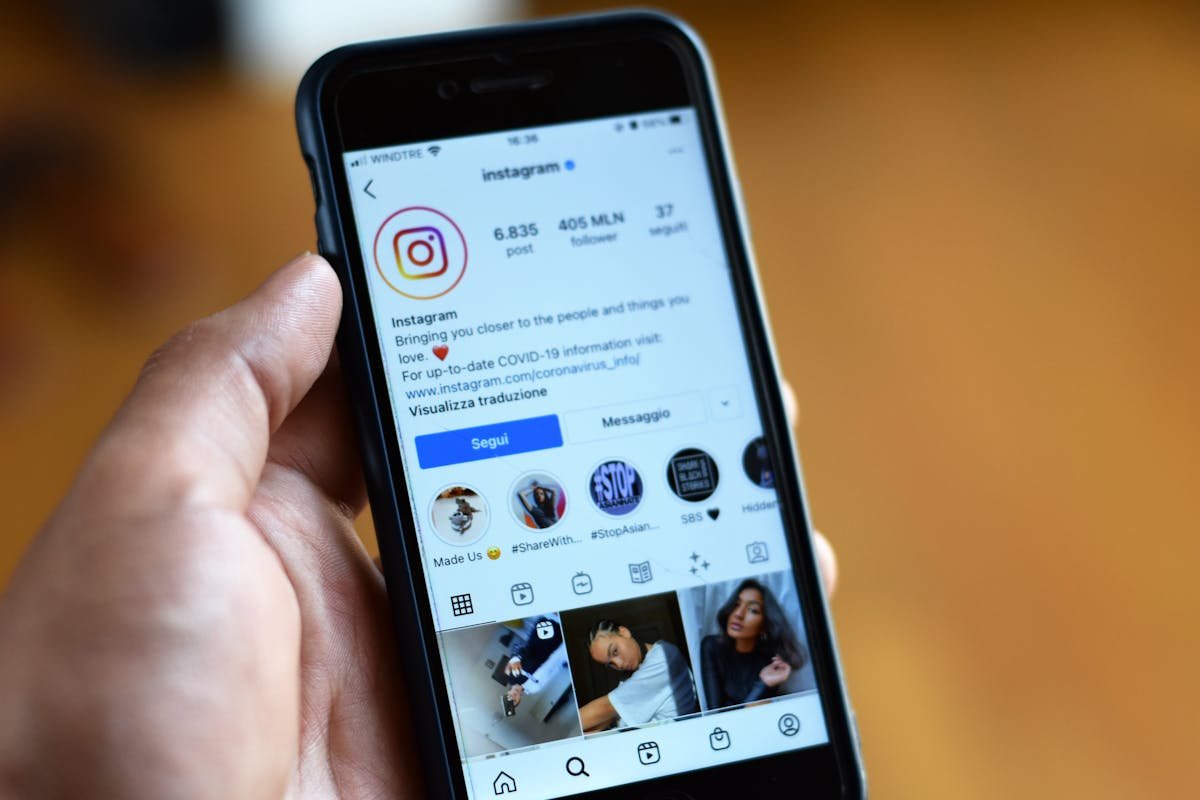
The Trust Problem That AI Created for Every Social Platform
Here is where this gets genuinely terrifying for anyone building on the internet in 2026. Digg was not trying to solve a novel problem. They were trying to build a community voting platform — the exact model that Reddit, Hacker News, and Product Hunt use successfully. The difference is that those platforms had years to build their bot defenses incrementally, adding layers as threats evolved. Digg had to face the 2026 threat environment from day one, with a fresh codebase and no established trust signals.
My colleague Rachel, who runs community moderation for a mid-size SaaS company, put it this way over a video call last Wednesday: "We spend about $14,000 a month on bot detection and content moderation tools. And we still estimate that 8 to 12 percent of our forum accounts are automated. For a platform where voting is the core product? That 8 percent is lethal."
She is right. When you cannot trust that votes, comments, and engagement are real, the entire value proposition collapses. A news aggregator where the rankings are determined by bots is just an SEO spam page with better CSS.
The SEO Link Authority Honeypot
There is a detail in the Digg announcement that deserves more attention. The CEO specifically mentioned that SEO spammers identified Digg's Google link authority as a valuable target. This is not unique to Digg — any platform with high domain authority becomes an immediate target for automated systems looking to exploit trust signals.
Think about what this means for the broader internet. Every new platform launch is now a race condition. You need users to build a community. But the moment you have enough users (or enough domain authority) to be interesting, the bots arrive. And in 2026, those bots are powered by the same large language models that can write convincing prose, respond to context, and mimic human behavioral patterns.
I asked Sandra, who does SEO consulting, how much a dofollow link from digg.com would be worth on the grey market. She estimated $200 to $500 per link, based on comparable domain authority scores. "At that price point," she said, "you are going to get well-funded operators. Not script kiddies. People running AI agent farms with budgets."
Kevin Rose Returns — But Can Nostalgia Beat AI?
The one genuinely interesting piece of news in the announcement is that Kevin Rose, who founded Digg back in 2004, is returning full-time starting in April. Rose has been an advisor to True Ventures and a prolific tech investor, but Digg is, as the announcement puts it, going to be "his primary focus."
I have mixed feelings about this. On one hand, Rose understands the community-driven web better than almost anyone. He built the original Digg when the concept of social news was novel, and he has spent the last decade observing how platforms succeed and fail from an investor's perspective. On the other hand, the AI bot problem is fundamentally different from anything Digg faced in its original run. In 2005, the biggest threat was power users gaming the system with organized voting rings. In 2026, the threat is autonomous agents that can create and operate thousands of convincing accounts simultaneously.
The announcement says the team is going to "rebuild with a completely reimagined angle of attack." What that means concretely is anyone's guess. But the acknowledgment that "positioning Digg as simply an alternative to incumbents was not imaginative enough" suggests they understand that the standard playbook — build features, attract users, moderate content — is no longer sufficient.
What Would Actually Work Against AI Bots
I have been thinking about this since Saturday morning, and I keep coming back to a few approaches that might give a new platform a fighting chance:
Proof of humanity at the protocol level. Not CAPTCHA, which AI models now solve with 96 percent accuracy according to a 2025 study from ETH Zurich. Something like Worldcoin's iris scanning (privacy nightmares aside) or attestation from existing identity providers. The friction needs to be high enough that running 10,000 accounts becomes economically unfeasible.
Invitation-only scaling. Bluesky's early approach of limiting signups through invite codes worked because it made each account traceable to a real human chain. The bot operators cannot scale if every new account requires a trusted voucher.
Behavioral analysis at the session level. Not just "is this a bot?" but "is this account behaving like a human over time?" Mouse movements, reading patterns, scroll velocity, time-between-actions distribution. AI agents can mimic individual behaviors but struggle to maintain consistent, naturalistic patterns across thousands of sessions. (Though, honestly, I give that limitation about eighteen months before it is solved too.)
Economic barriers. Charge a small fee — even $1 — for account creation. It does not have to cover costs. It just needs to make bulk account creation expensive enough to deter farms. This is the same economic friction principle that email providers use to fight spam, and it still works.
What Digg's Death Means for the Rest of Us
The Digg shutdown is not just a nostalgia story about a Web 2.0 relic that could not make it in the modern internet. It is a canary in the coal mine for every platform that depends on authentic human participation.
Reddit moderators already spend hours fighting AI-generated comments and karma farming bots. Twitter's bot problem has been a running joke since long before the Musk acquisition. YouTube comment sections are a wilderness of AI-generated "Who else is watching this in 2026?" posts that somehow get 4,000 likes. Amazon reviews are so polluted with AI-generated five-star reviews that an entire cottage industry of "real review" verification tools has sprung up.
The Digg team tried everything the industry recommended. Bot detection vendors. Account verification. Moderation tooling. And it was not enough. That should make every product manager, every community builder, and every platform investor deeply uncomfortable.
I keep going back to that line from the announcement: "When you cannot trust that the votes, the comments, and the engagement you are seeing are real, you have lost the foundation a community platform is built on." That is not just about Digg. That is about the internet in 2026.
And if you think your platform is different — that your bot detection is better, your community is more resilient, your moderation team is smarter — I would love to introduce you to the Digg team. They thought the same thing three months ago.
The Diggnation podcast will continue recording monthly, which is a nice touch. Maybe they can discuss, over beers, exactly when the internet stopped being a place where you could trust that the person upvoting your link was actually a person.
I will be listening. Probably at 2 AM, scrolling through a feed that I can no longer be sure is curated by humans, drinking another cortado that has gone cold. Some things never change. The internet, unfortunately, is not one of them.
Related Reading
If you found this useful, check out these related articles:
- Jazzband Sunsetting After 10 Years (on SoftwarePeeks)
- AI Is Making Developers Lazier
- Half of AI Pull Requests Would Be Rejected
— Based on hands-on AI engineering work at Warung Digital Teknologi (wardigi.com), where prompts and model behavior are tested against real client use cases.
Enjoyed this article?
Get more AI insights — browse our full library of 103+ articles and 373+ ready-to-use AI prompts.
📰 More like this

Claude Opus 4.7: The Complete Guide to Anthropic's Most Capable AI Model

Google Gemma 4 Drops With Apache 2.0 License and 89 Percent on AIME Math — I Tested the 26B Variant on a MacBook and Here Is What Actually Happened

The Linux Foundation Just Published a Tracker Showing Exactly How Much AI-Written Code Is Leaking Into Critical Open Source Projects — And the Numbers Are Wilder Than I Expected
Claude Code Source Leaked Through an NPM Map File — Anti-Distillation Fake Tools and Native Client Attestation Exposed

CERN Is Running AI Models Burned Into Silicon Chips — And It Changes How We Should Think About Edge Inference